The Novice's Overview to Product Photography
If a image deserves a thousand words, a sensational product image is worth a thousand internet site sees. Although I do not have data to back up that statement (yet), product photography can be extremely useful to your ecommerce site method.
To reach your target market members that like buying online, you likewise require to give your audience clear, captivating images of your items.
However product photography isn't as basic as pointing and also shooting. Even one of the most fundamental products require the correct devices, illumination, as well as area to create lovely pictures that sell customers right from the purchase page.
6 Product Photography Tips (and Examples) for Taking Photo That Offer
Right here are the suggestions, examples, and also materials you'll need to successfully picture and market your products in such a way that makes your visitors and prospects intend to transform.
1. Do not hesitate to utilize your mobile phone's camera.
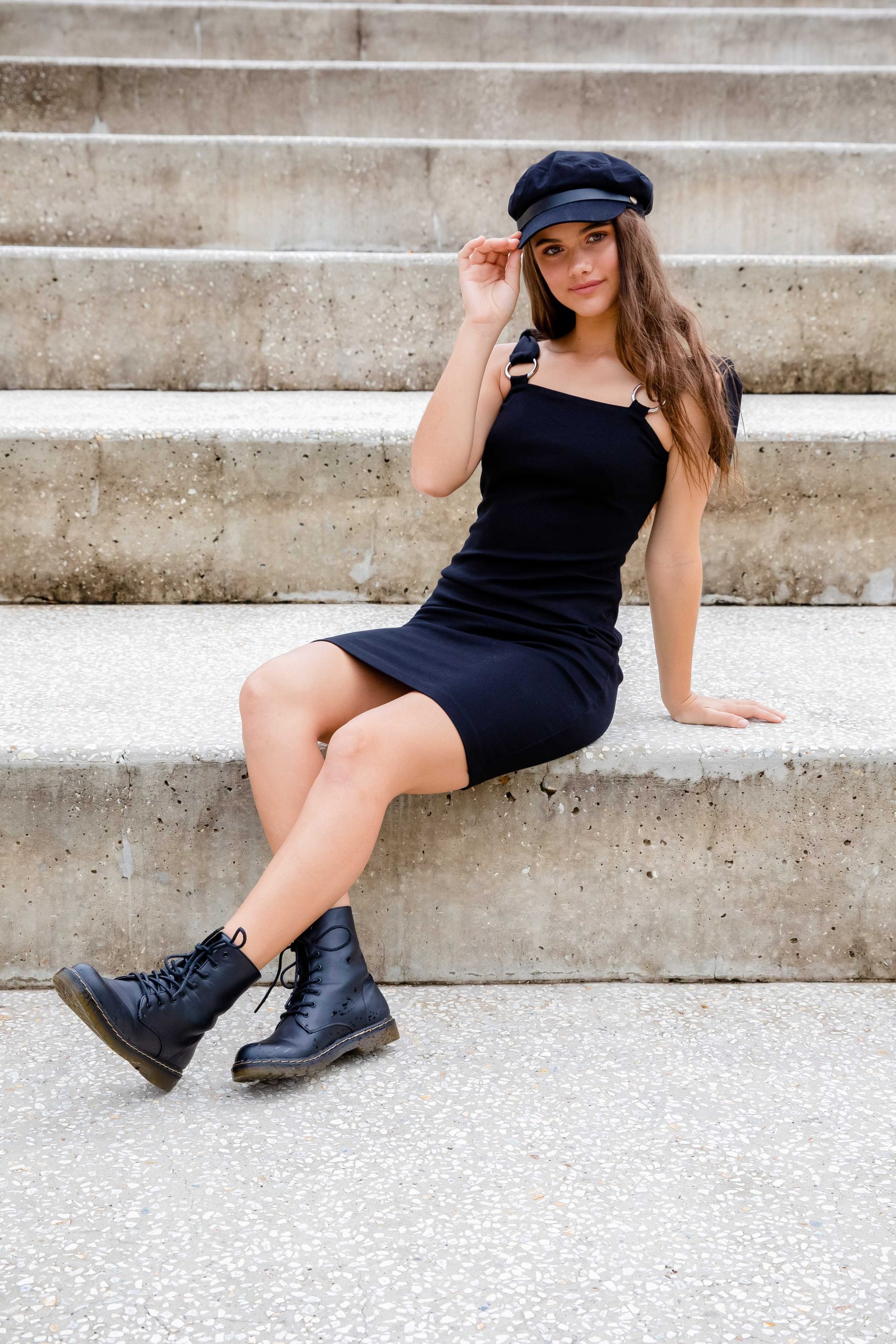
This is the component where I'm intended to encourage you to purchase a premium, 50-megapixel (MP) cam with a 100-millimeter screw-on lens. Yet I'm not mosting likely to do that.
If you already own a camera that fits this description, make the most of it. However, for numerous kinds of products, it's completely appropriate to fire product images on a smartphone.
Newer smart devices flaunt powerful camera lenses and settings that enable you to enhance your shots for the different types of light as well as settings you may shoot in.
If you need more persuading, simply check out Apple's Shot On An apple iphone campaign and also the images that have actually resulted from it throughout the years such as this one:

2. Shoot from a tripod for photo consistency.
Prior to describing tripods, I'm bound to start with a principal rule: Do not prop your phone against something durable to intend your lens toward the topic.
It's simply as well very easy for this makeshift setup to glide around during the shoot and also cause disparities in your photos' look. If you rest your camera on, claim, a pile of publications, simply make certain this arrangement doesn't change throughout the shoot.
There's no damage in holding your camera on your own when firing just a couple of product images for your ecommerce site. Yet as your organization grows, and you take much more photos of even more items, it can be difficult to standardize the product's alignment in each photo when shooting portable.
To guarantee uniformity throughout your items, you'll need a tripod. And thankfully, getting one isn't always the huge, industrial-sized financial investment it made use of to be.
Here are two sorts of tripods to consider.
Standard vs. Flexible
This is a tradition tripod-- there are conventional tripods readily available for both cams and also smartphones.
A adaptable tripod can be controlled in a variety of ways. You can bend its legs as well as position it on different surface areas to get the angle you need.
Mobile Hold
There's commonly a screw on the top of your tripod which affixes to your electronic camera to hold it in position. The underside of the majority of professional-grade cams has a screw hole just for this function, however smartphones can make use of the adhering to adapter:
The adapter holds the sides of your smart device and can screw right into either sort of tripod, enabling you to run the camera manages with the phone display dealing with external as well as toward you.
When you identify which mount you'll require, set it up before your product, as well as think about placing three pieces of tape on the ground to mark where you would love to keep each leg of your tripod throughout the shoot.
3. Select all-natural light or artificial light.
Never take too lightly how specific sorts of light can boost (or prevent) your product photography. Bear in mind, purchasers obtain the very best look at an thing in person, where they can see everything they require to before purchasing. The appropriate lighting plan helps you disclose those critical decision-making product features when all website site visitors have to go on is a photo.
A single lighting arrangement may not benefit every product-- a lights arrangement that benefits some products could deteriorate the look of others.
There are 2 types of light you can select as your main light source: natural and also fabricated light.
Natural Light
Natural light describes sunshine-- easy as that. It's likewise referred to as "soft light" because the sun casts a larger, softer variety of light than, claim, a light radiating straight on the product. Ecommerce product shots thrive in all-natural light if:
The product is shot outside or indicated to be used outside.
The product is used by, worn on, or shot with a person ( individuals have a tendency to look much better in natural light).
You're attempting to highlight the product's environments, instead of specific qualities of the product.
Right here's an instance of a shot making use of natural light:
Synthetic Light
Fabricated light includes candles, fire, and extra frequently, light bulbs. It's also described as " tough light" since it produces a smaller however much more focused light surface. This kind of light satisfies products with physical details that require to be highlighted to thrill an online customer.
As a general policy, stay with just one sort of light per photo-- natural or artificial. Including all-natural light to an unnaturally lit photo can soften a product that's suggested to festinate, and adding artificial light to a normally lit photo can hone a product that's suggested to look soft. You do not wish to enter your own way.

4. Fill or jump your light to soften darkness.
Whether you make use of all-natural light or man-made light, you'll require to decrease the darkness that any kind of prospective tough light casts on the opposite end of a product.
There are three ways to do this:
Load Light
Include one more, less-intense light to supplement your major light. This added light is called your fill light as well as is made use of as a counterbalance to soften the natural shadow your major light creates behind an things.
To do this, position your fill light contrary your major light so your product sits between both lights.
Flashbulb Bounce Card
A bounce card, or reflector card, is a little card that " shows" or "bounces" the primary light back onto the surface under your product to lower darkness.
Some bounce cards connect to the flashbulb of a specialist cam lens to diffuse the light from the video camera's flash. This card sprays a softer light onto the subject from above your set-- rather than straight at it-- so you don't have long shadows trail behind the item you're firing.
Standalone Bounce Card
If you're shooting from a smart device, a flashbulb bounce card isn't an option, because you do not have a physical flash you can attach it to. Rather, make your own standalone bounce card positioned contrary your major source of light.
For novices to product photography, this bounce card can successfully change your fill light, which counters the hard light from the cam flash or light that's encountering toward the front of your product.
5. Use a sweep or picture setting to emphasize the product.
There isn't one ideal method to place your product, lights, as well as jump cards-- they can transform dramatically relying on your history. Yet do not choose a history based on what's simplest to produce. Backgrounds must look like how you desire your customers to view your product when viewing it online.
Take into consideration first whether you 'd such as a white background or a much more dynamic, real-world history. There's an easy way to achieve every one.
White Background: Move
For white backgrounds, it's not as straightforward as establishing a table versus white drywall. Also smart device cameras can grab little blemishes on a white wall surface that you wouldn't discover with the nude eye. To record a ideal white history with no edges or blemishes, utilize a move.
A sweep is a huge bendable sheet of paper, whose bottom function as the surface area under your product and then curves up into a white read more wall surface behind the product.
On cam, the move's curve is unseen, highlighting vital product details and also allowing the thing to have every one of a site visitor's interest.
Real-World Background: Picture Mode
Dynamic, real-world backgrounds are very attractive when capturing items that have a certain use or are being modeled by a person-- as you saw in the picture of the briefcase earlier in this overview.
Yet, it's simple for a real-world background to swipe the emphasis of the photo, making it uncertain which product in the photo you're really selling.
Provide your product depth and focus with portrait mode, a picture setting on the majority of expert cameras, as well as also readily available on numerous brand-new smart devices. This setup obscures the background so the context of the product is clear however not competing versus the product itself.
Below is a extremely outstanding photo of a HubSpot pen absorbed portrait setting on a Google Pixel 2 (I took this picture myself). You can inform the pen rests on a desk with a computer system behind it, yet the pen is still the prime focus for viewers:
6. Shoot a variety of pictures.
My last ecommerce photography pointer to you is to not stop at one photo per product. Just as your customers look, hold, utilize, and even try on product in a shop, your internet site needs to shoot a selection of pictures to replicate this very experience.
If you're firing clothes, as an example, catch the garment of apparel alone-- that is, spread out on a white surface-- as well as on a mannequin whose color contrasts the color of the product.
After that, for extra photos, have the clothes modeled on a individual, permitting you to take images of the product from the individual's various presents and angles.
Product Photography Set-Up
Next off, allow's summarize what we just obtained-- here's a list of fast product photography set up tips that you can describe and share on your group:
• Choose a electronic camera-- whether or not that means using your smartphone.
• Obtain a tripod that benefits your video camera of selection.
• Select all-natural or synthetic illumination-- consider which alternative is best for your product and environment.
• Determine whether you'll fill up or jump light.
• Select sweep or portrait setting.
• Take several different images to supply your visitors range.
Start With Your Product Photography
Do not feel obligated to purchase every pointer as well as tool simultaneously. Use these product photography suggestions progressively to see what makes your store look one of the most presentable, and change your method as your photography chops improve.